The Trychler Club: Becoming Part of Village Life in Wengen
Ten years ago, I was in the process of finalising arrangements for our move to Switzerland.
The United Kingdom had just made the decision to leave the European Union and, whilst nobody was quite sure at the time what the consequences of Brexit would be, I was certain that our move needed to happen sooner rather than later.
Once the decision was made, I was very fortunate to have plenty of people around me to whom I could turn for advice. Amongst all the brilliant advice I received, one piece stood out more than any other:
“Join a local club.”
The reason those words stuck with me didn’t become apparent until much later, but without them, our life in Wengen could have turned out very differently.
Becoming part of life in Wengen
As a foreigner living in Switzerland, I have always believed that the emphasis is on us to make the effort to integrate into the local community.
Wengen has always been popular with the British, but being a British person in Wengen does not automatically mean that you are integrated. Far from it.
It takes time and effort. Learning the language, understanding the culture and, of course, respecting the local rules and customs are all part of living here. Having chosen to relocate to their village, I completely understand that the emphasis should be on us.
Integration is important for another reason. Living and working in Switzerland requires you to hold a sequence of residence permits throughout the process which, after a ten-year period, can ultimately result in you gaining Swiss citizenship.
But more of that later.
An invitation I wasn’t expecting
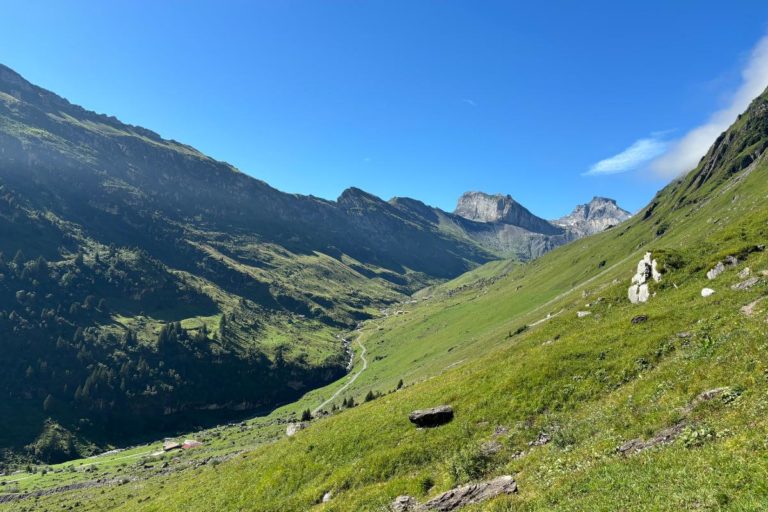
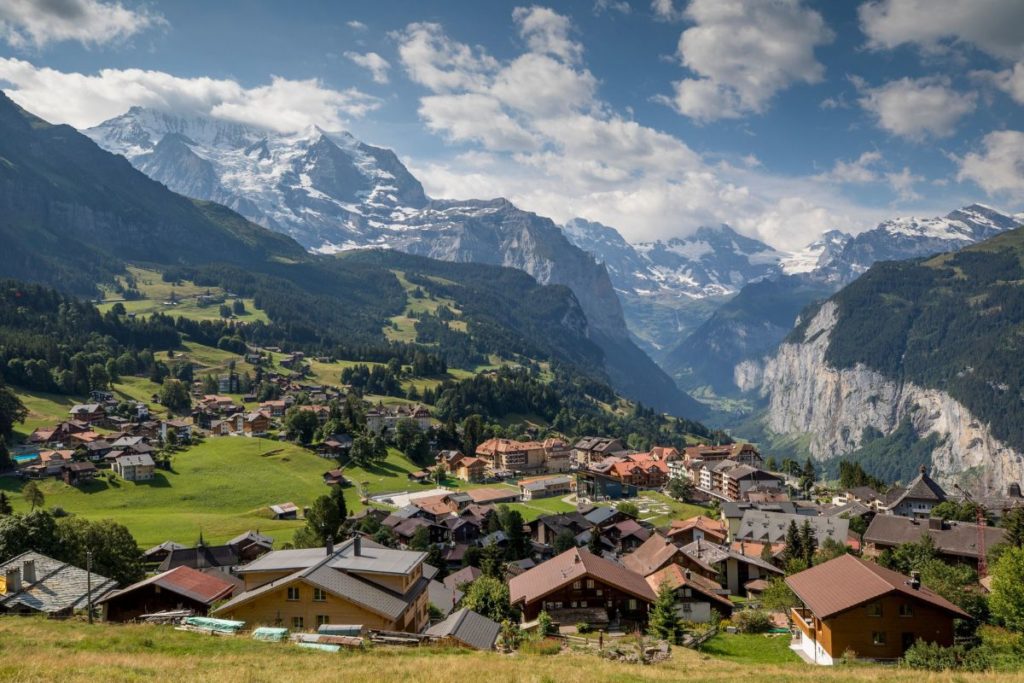
With hiking being one of my passions, Wengen is, of course, the perfect place to live. I’ve spent a great deal of time exploring the mountains around the village over the years, as well as hiking further afield on routes such as the Via Alpina.
During some of my early hiking days, I became aware of how the land above and around Wengen was taken care of by a small group of local farmers and their cows. I soon learnt about the milking patterns of the cows, and it became clear that milking time was always at roughly the same time each evening.
During my regular evening hikes, I started to pass the same farmer each evening and we would acknowledge one another with a polite nod.
Back then, the language barrier was certainly in place. I spoke no Swiss-German, and certainly none of the local dialect, while the farmer spoke no English.
Over time, however, the original friendly nod started to become a conversation of sorts, with some very basic German and a few hand gestures.
Not long after our first exchange, it became clear that the farmer was trying to invite me to join him and his friends in the village one evening, although it wasn’t clear to me exactly why.
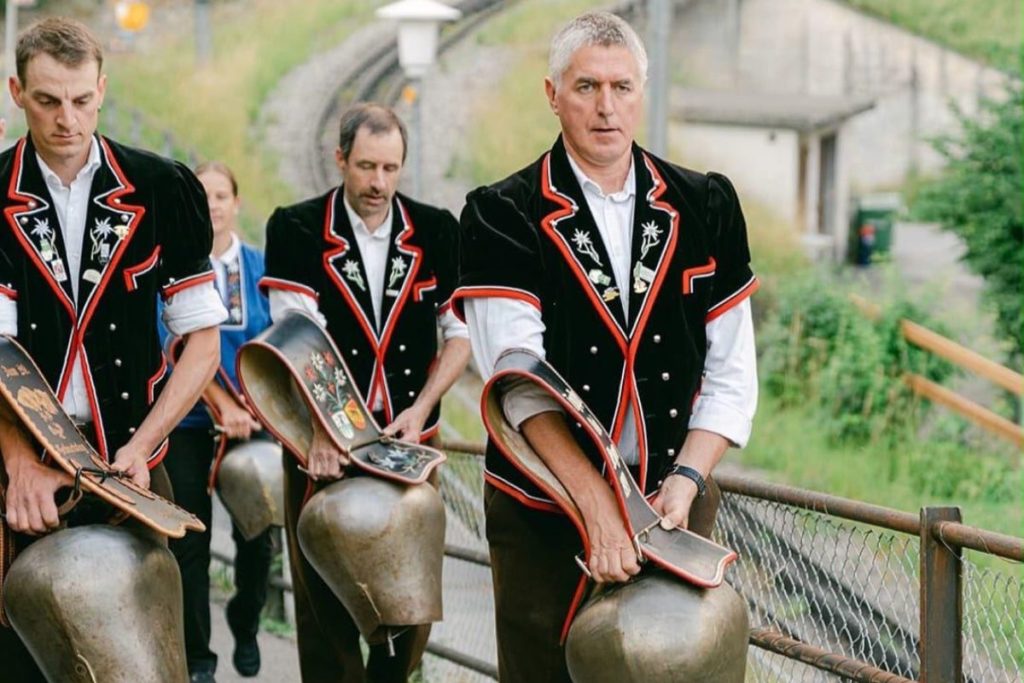
The following Thursday evening, I met up with a group of locals, including the farmers, who were all dressed in traditional costume and carrying large cowbells.
This was the Wengen Trychler Club.
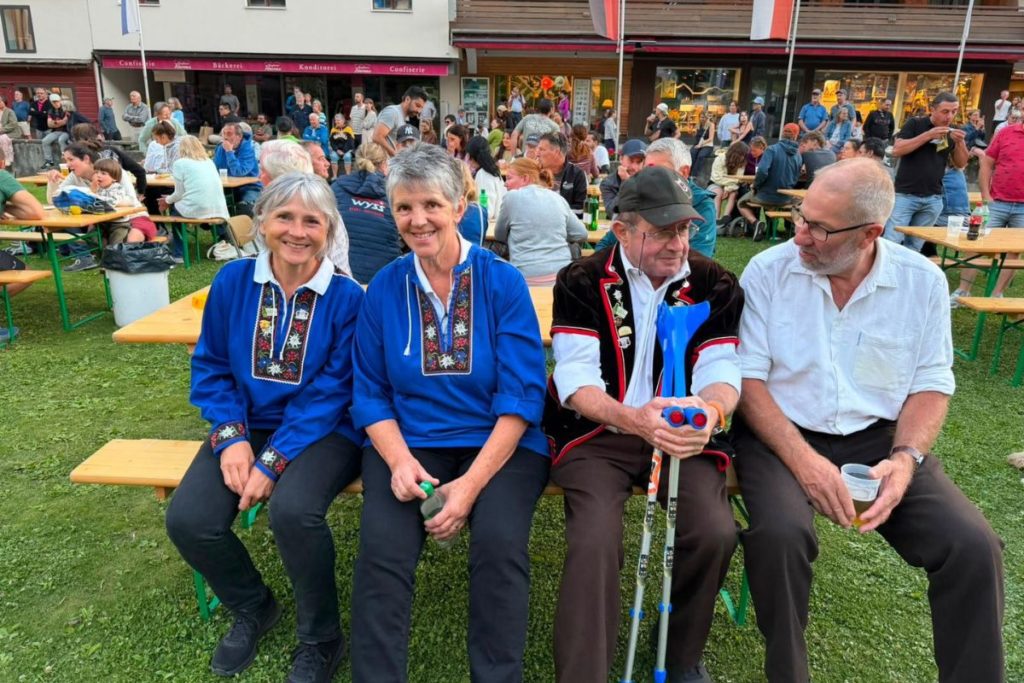
My first experience of the Trychler tradition
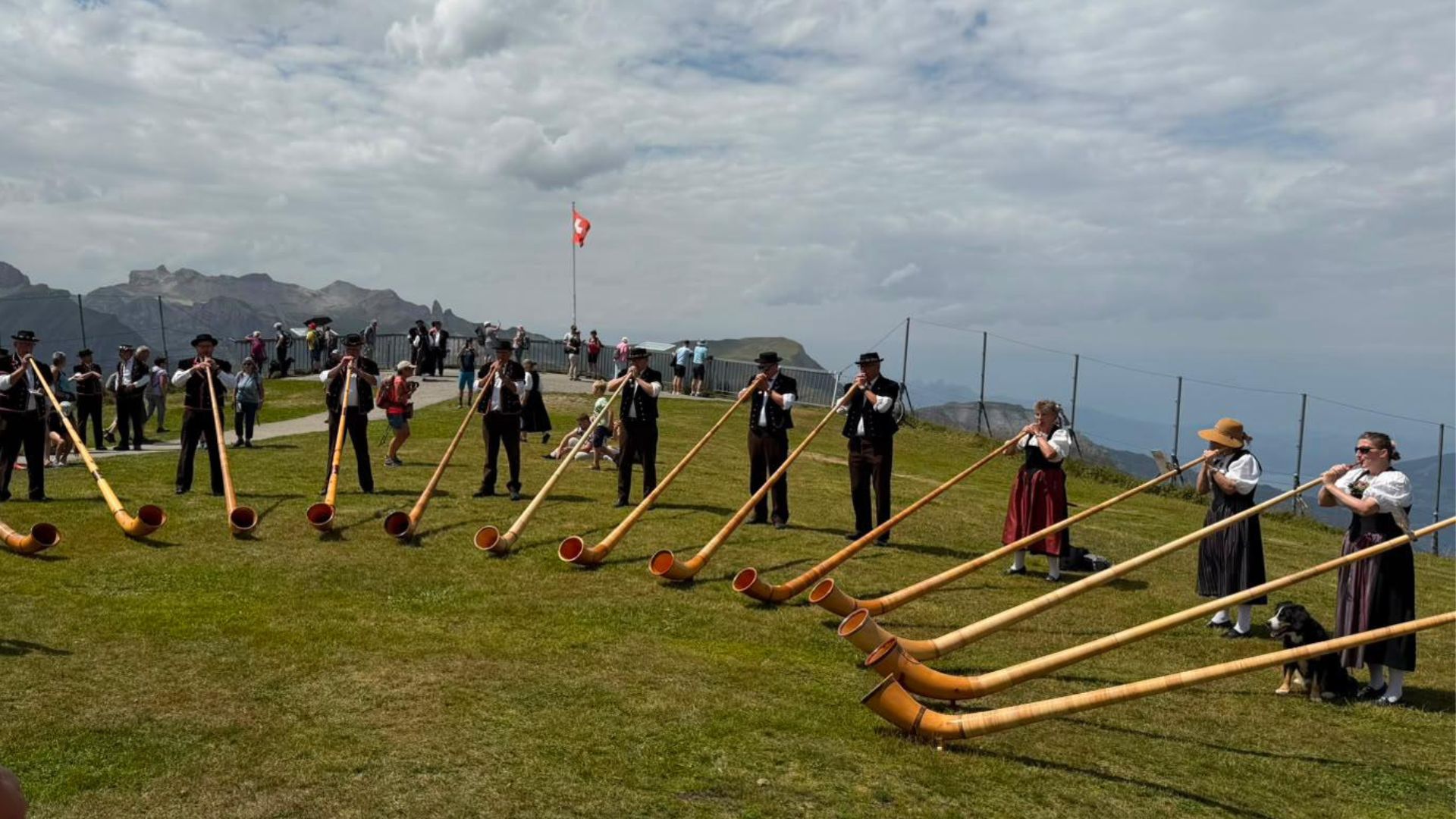
Their role that evening was to formally open Wengen’s Folklore Evening, where everyone in the village, including visitors, could enjoy some of the local traditions. Alongside the Trychler Club were the local brass band, Alphorn players, dancers and a trio playing the accordion, double bass and spoons.
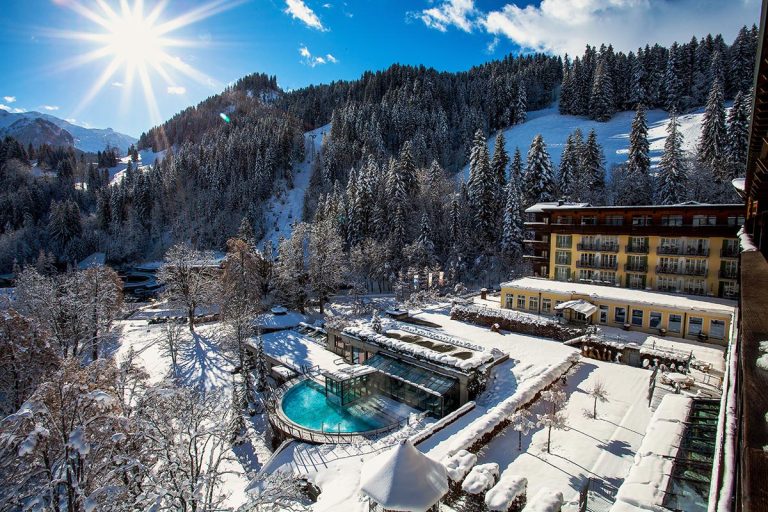
These traditions are part of what gives Wengen its identity and, naturally, they are also extremely popular with visitors to the village. That sense of history is still visible in places throughout Wengen, including the family-owned Hotel Falken, which has been welcoming guests since 1895.
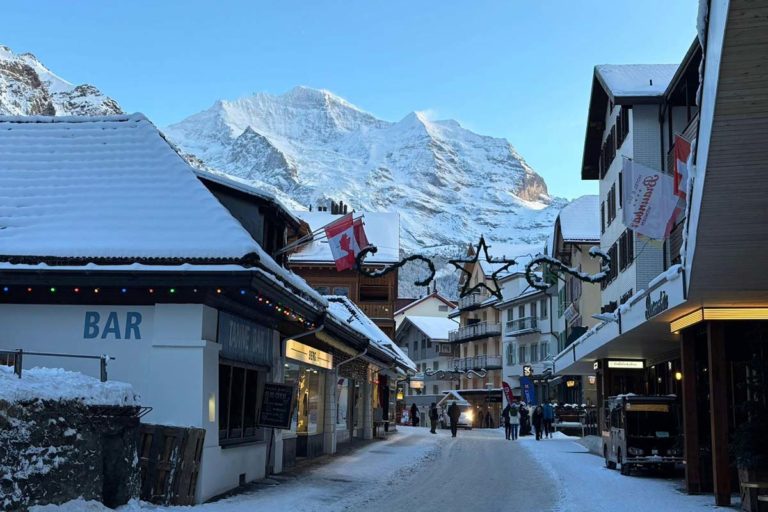
After I watched the Trychler Club parade their cowbells down the high street, it became clearer why the farmer had invited me along.
He wanted me to join the club.
Over time, membership numbers of clubs like these can dwindle, with older members outnumbering younger ones. Despite the falling numbers, however, membership is by invitation only.
Being invited to join the Trychler Club so soon after moving to Wengen came as a complete surprise, but my mind immediately went back to the advice I had been given before moving to Switzerland.
So I accepted the invitation.
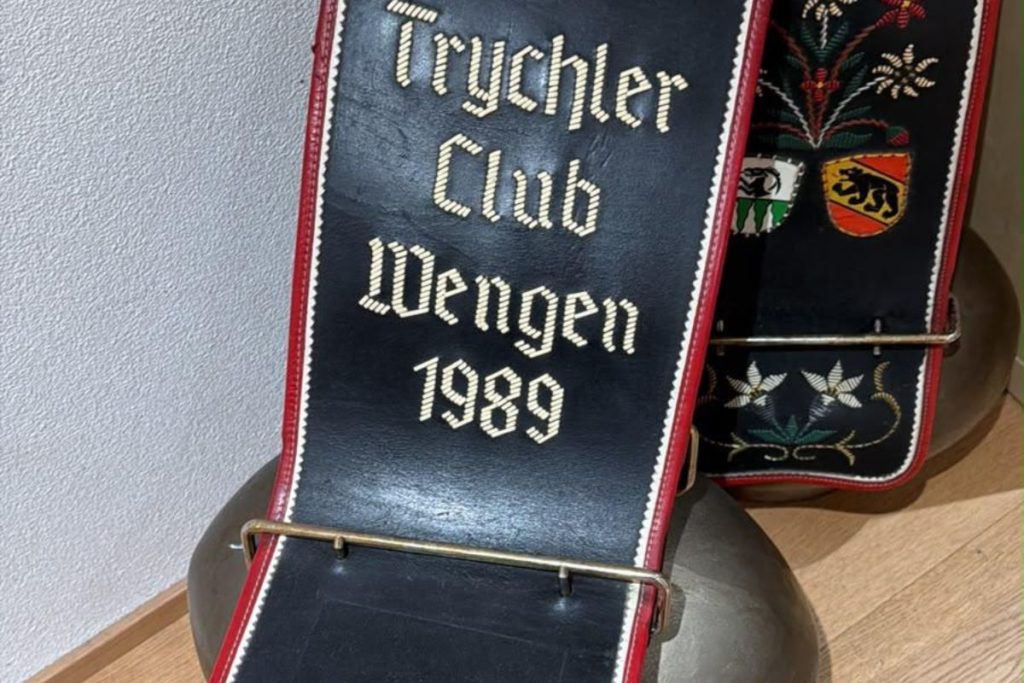
My first Trychler parade
Two weeks later, now complete with my own traditional costume, I took my place behind the club’s President in my first Trychler parade.
I was slightly nervous, and there were a lot of people watching, but things seemed to go well.
It wasn’t until the following morning, however, that I realised the true impact of what I had done the night before.
Locals who had previously only given me a polite nod across the street were now coming up to me to find out a little more about my background.
At this stage, the language barrier was still there, but week by week and month by month, with more interaction with the locals, it gradually started to come down.
Eight years have now passed since I joined the Trychler Club. Without the Club, I am convinced that my Swiss-German would be nowhere near as good as it is today, and I certainly wouldn’t be as well integrated within the village community.
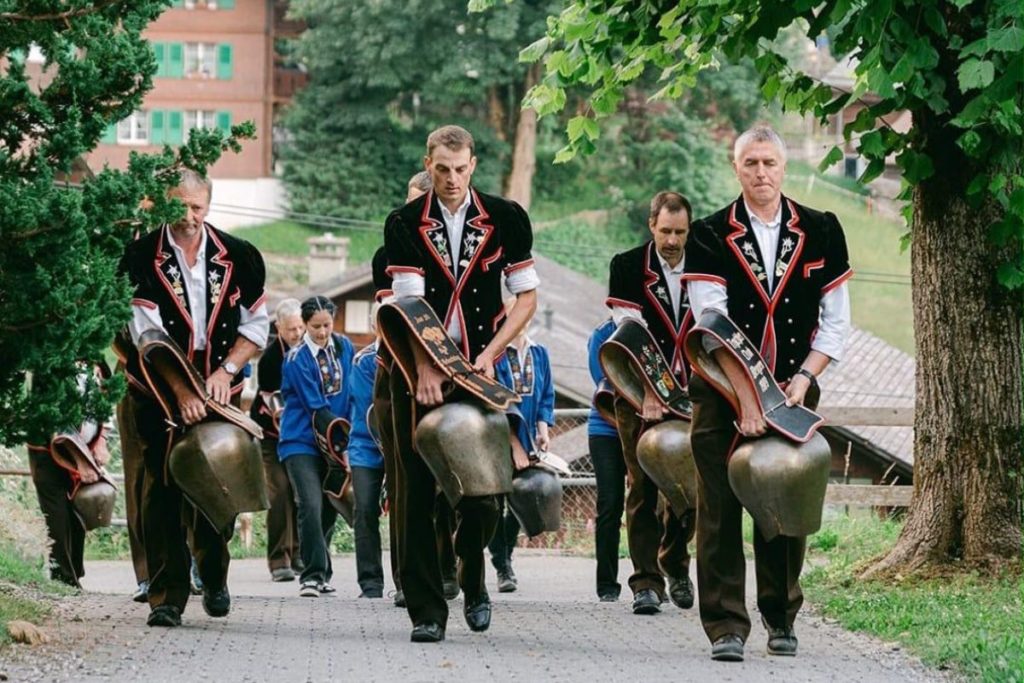
Why Switzerland’s local traditions still matter
The Trychler Club has also enabled me to interact with members of other clubs and, by doing so, I’ve come to appreciate just how important clubs of this nature are to local communities.
Throughout the year, local and regional traditions are celebrated all over Switzerland. Whilst they provide a fantastic opportunity for visitors to experience these traditions first-hand, they also play an important role in preserving the identity of individual villages and regions.
Swiss National Day on 1 August is probably the best example. The entire country celebrates, with many of these traditions on display throughout the day in villages, towns and cities across Switzerland.
For visitors, these occasions offer a very different perspective on Switzerland from the famous railway journeys, mountain viewpoints and hotels for which the country is so well known. They’re also a reminder of why genuine local knowledge can make such a difference when planning a trip. Having lived in Wengen and travelled extensively throughout the country, I’ve always tried to bring that first-hand knowledge to the way we create itineraries around Switzerland.
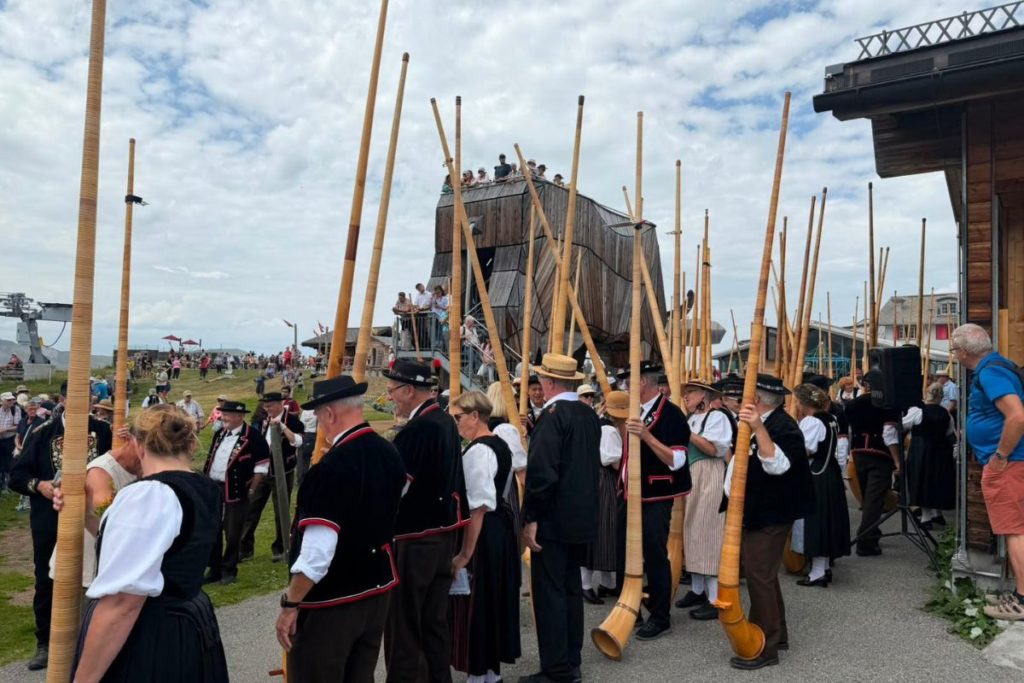
Ten years later…
I’m extremely proud to be part of the Trychler Club in Wengen and can safely say that the advice I was given in the very beginning was the most important piece of advice I received before moving here.
Joining the club helped me improve my Swiss-German, introduced me to people throughout the village and gave me a much deeper understanding of the traditions that continue to shape life in this part of Switzerland.
Now, as the date for my final exams towards gaining Swiss citizenship approaches, my membership of the Trychler Club is more important to me than I could possibly have imagined when I first accepted that invitation eight years ago.
For me, becoming part of life in Wengen has always meant taking part rather than simply observing it.